"On-chain hosting" sounds like a technical detail for developers to care about. It isn't. It's the reason you'll never pay a hosting bill again if you build with us, and it's worth understanding in plain terms.
Here's the version that doesn't require a computer science degree.
Start with how normal hosting works
When you build a website the traditional way, your site lives on a server. That server is a physical computer, usually in a data center owned by Amazon (AWS), Google Cloud, or Microsoft Azure. You're renting space on that computer.
Every month you pay rent. The landlord is one of three enormous corporations. If they raise prices, you pay more. If their servers go down, your site goes down. If they decide to stop offering the service you're on, you migrate or lose your site.
This is the model that has defined web hosting since the beginning of the commercial internet. It works. It's reliable enough. But you're always renting, and the landlord always has more leverage than you do.
What the Internet Computer does differently
The Internet Computer Protocol is a blockchain network. But unlike most blockchains you've heard of, it doesn't just track transactions or store tokens. It runs software. Full websites, full applications, databases, user authentication, payment processing. All of it, running on the blockchain itself.
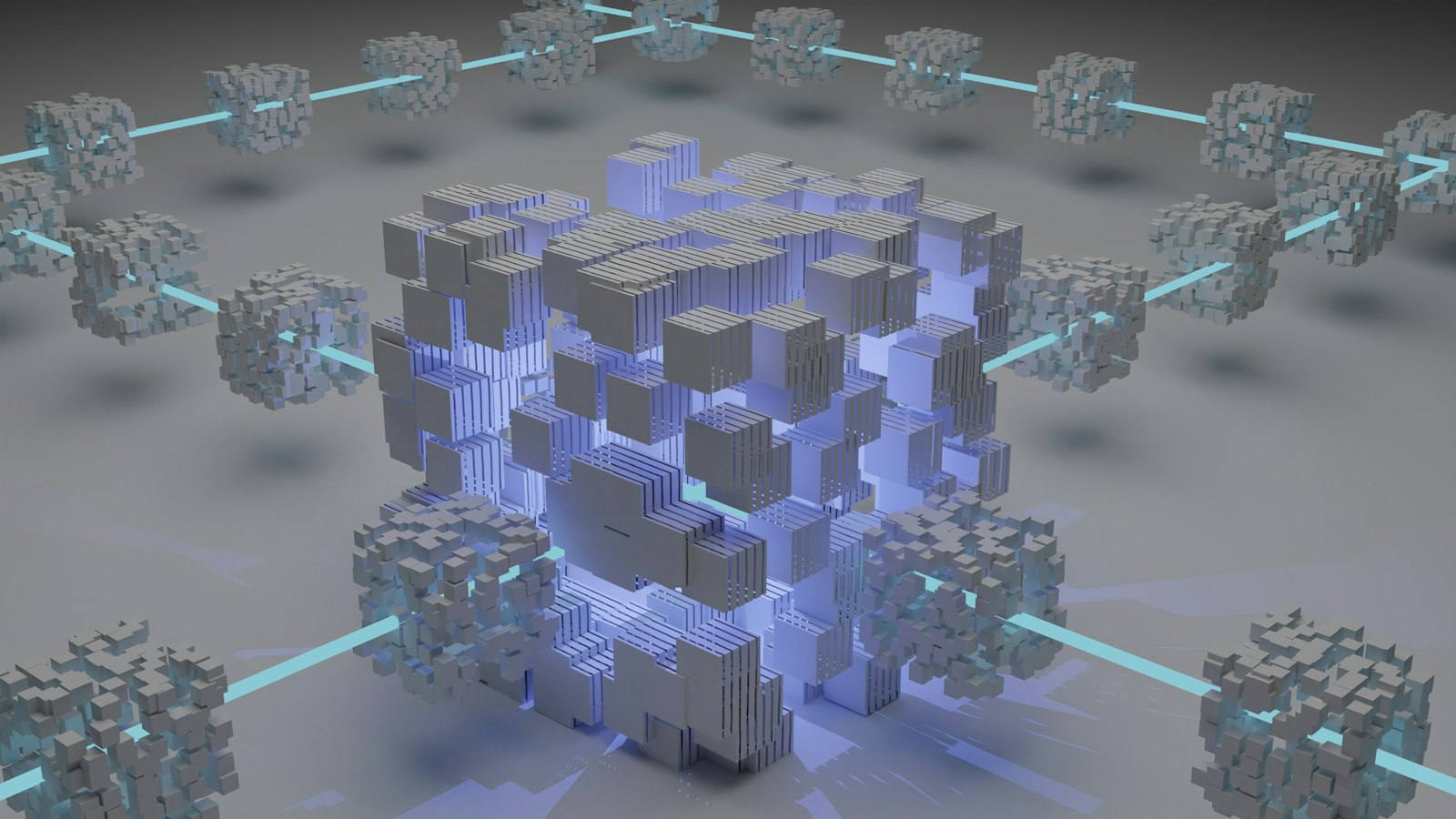
Instead of your site living on Amazon's servers, it lives in what's called a canister. A canister is the basic unit of computing on ICP. It holds your site's code and data, and it runs on a distributed network of independent nodes, which are computers operated by independent parties around the world, not owned by any single company.
Your site isn't in one place. It's distributed across many nodes simultaneously, which is why it can't go down the way a traditional server can. There's no single machine to fail.
Why this eliminates your hosting bill
On traditional hosting, you're paying for server time and storage on Amazon's infrastructure. Amazon buys the hardware, runs the data centers, employs the engineers, and charges you for access to all of it.
On ICP, the network itself covers the cost of computation and storage through its own economics. When we deploy your site, we make a one-time payment to fund the canister's initial operation. After that, the storage and compute costs are covered by the network indefinitely.
This isn't a subsidy that will run out. It's how the protocol works. The economics are built in.
The practical result for you: zero monthly hosting fees. Not low fees. Zero. Your site runs permanently without a recurring bill.
What you actually own
When we deploy your site to ICP, we hand you the canister. Not a login to someone else's dashboard. The actual canister, transferred to your control.
This is a meaningful distinction. On traditional hosting, you have an account with a company. If that company goes away or changes its terms, you have a problem. The canister you own on ICP is yours in the most direct sense. It's transferable. It's permanent. No company can take it from you.
You're not renting computing. You're owning it.
The numbers
At the average hosting cost of $50 per month for a small business website, traditional hosting costs $600 per year and $3,000 over five years. A more robust hosting setup at $100 per month costs $1,200 per year and $6,000 over five years.
On ICP, that number is zero. Every year. Permanently.
That money stays in your business.